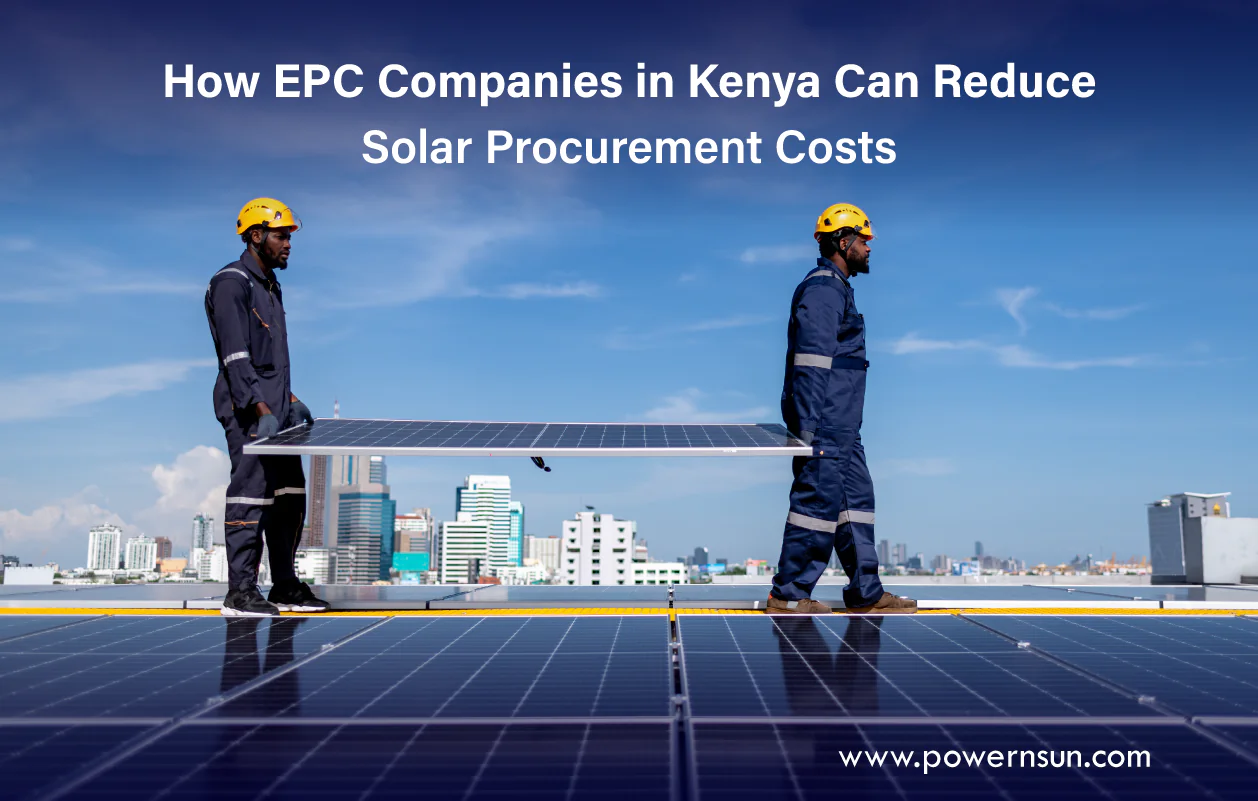
How EPC Companies in Kenya Can Reduce Solar Procurement Costs
If you speak with most EPC contractors in Kenya today, the conversation usually starts the same way: margins are tighter, clients want projects delivered faster, and procurement headaches keep getting worse.
Panels arrive late. Customs clearance drags longer than expected. One missing inverter holds up commissioning for two weeks. Then the client starts calling every day asking why the project is delayed.
That’s the part people outside the industry don’t really see.
Kenya’s commercial solar market is growing fast, and many EPC companies are now depending on an experienced solar distributor in Kenya to improve procurement reliability and project execution.
And honestly, chasing the cheapest supplier rarely works out the way people expect.
The Cheapest Solar Equipment Usually Ends Up Costing More
A lot of procurement decisions still revolve around upfront pricing. Someone offers modules a few dollars cheaper per panel, and suddenly the conversation shifts entirely to cost savings.
But on real projects, that “saving” disappears quickly.
Maybe the shipment gets delayed at Mombasa. Maybe the supplier runs out of stock halfway through the order. Maybe warranty claims become impossible after installation. Or worse, the panels perform below expectations six months later and the EPC company is the one blamed for under-performance.
That’s where procurement starts affecting reputation, not just margins.
Experienced contractors eventually realize procurement costs are not only about product pricing. They include:
- Shipment delays
- Warehousing costs
- Customs handling issues
- Inconsistent stock availability
- Technical support gaps
- Site downtime during commissioning
- Replacement logistics
- Client relationship damage
One delayed commercial project can wipe out profit from multiple smaller installations. Especially now, when EPC competition in Kenya has become extremely aggressive.
Why Many EPC Companies Are Moving Toward Long-Term Supply Partnerships
Most successful EPC firms are no longer buying project-by-project from random traders.
They’re building procurement relationships.
There’s a practical reason for that. Reliable suppliers make project planning easier. Installers know what products are consistently available, what lead times to expect, and who to call when something goes wrong onsite.
That stability matters more than people think.
A strong procurement partner can usually help with:
- Forecasting stock requirements
- Container planning
- Technical sizing support
- Faster documentation
- Warranty coordination
- Logistics updates
- Commercial pricing for repeat projects
And in East Africa, where shipment unpredictability is still common, having regional stock support changes everything.
A lot of EPC teams learn this the hard way after depending entirely on overseas suppliers who disappear once payment is completed.
Bulk Procurement Makes More Sense Than Constant Small Orders
Small-volume procurement looks safer initially. Lower cash exposure. Less inventory pressure.
But operationally? It usually becomes expensive.
Repeated small shipments create ongoing customs charges, inconsistent freight costs, and constant procurement cycles. Teams spend more time sourcing than executing projects.
Container-based procurement tends to work far better for EPC companies handling recurring commercial installations. Especially when sourcing:
- Solar panels
- Hybrid inverters
- Battery storage systems
- Mounting structures
- BOS components
Bulk purchasing also improves negotiation leverage. Freight becomes more predictable. Inventory planning improves. And installers stop facing last-minute shortages during active projects.
In Kenya right now, stock inconsistency is one of the biggest hidden problems affecting EPC profitability. Some contractors win projects first… then start searching for available equipment afterward. That approach creates unnecessary risk.
Tier-1 Products Usually Protect EPC Margins Better
There’s always pressure to reduce project pricing. Every EPC company deals with it.
But low-cost products often create bigger financial problems later.
Commercial clients expect systems to perform for years without constant intervention. If equipment starts failing early, the EPC contractor becomes the first point of frustration, not the manufacturer.
That’s why most experienced solar developers stick with bankable brands even when pricing is slightly higher.
Tier-1 manufacturers generally provide:
- Stronger warranty backing
- Better technical documentation
- More stable product performance
- Lower degradation risk
- Easier financing confidence for clients
Brands like JA Solar, GCL Solar, Sungrow, Deye, and Power & Sun are commonly used across commercial and industrial projects because contractors already understand how these products behave in the field.
And honestly, avoiding one major warranty issue can justify the entire procurement decision.
Logistics Problems Are Still a Major EPC Pain Point in Kenya
This part gets underestimated constantly.
Even when pricing is good, poor logistics planning destroys timelines.
Mombasa port delays, incomplete shipping documentation, unexpected clearance costs, and inland transport coordination issues still affect many solar projects in East Africa. Especially for utility-scale or multi-site commercial deployments.
A lot of EPC companies now forecast procurement much earlier than before. Some are locking inventory months ahead simply to avoid project disruption.
The companies managing procurement well usually do a few things consistently:
- Forecast demand early
- Consolidate shipments
- Avoid mixed-brand procurement chaos
- Work with suppliers holding regional inventory
- Standardize commonly used product.
Simple adjustments. But they reduce a surprising amount of operational stress.
Standardizing Products Across Projects Saves More Time Than Most EPCs Expect
Using different inverter brands on every project may look flexible, but it creates confusion internally.
Different monitoring systems. Different commissioning processes. Different warranty procedures.
Eventually technicians spend more time troubleshooting than installing.
Many profitable EPC firms standardize around selected product ecosystems because it simplifies:
- Engineering
- Installation
- Maintenance
- Technician training
- Spare inventory management
- After-sales support
It also speeds up procurement because teams already know exactly what works for specific project types.
And in commercial solar, speed matters. Delayed commissioning affects cash flow for both the EPC and the client.
Technical Support Matters More Than Sales Pitching
A supplier relationship gets tested after delivery, not during quotation stage.
When commissioning issues happen onsite, EPC teams need quick answers. Not slow email chains from another timezone.
Good suppliers support installers with:
- System sizing guidance
- Datasheets and certifications
- Commissioning assistance
- Troubleshooting help
- Warranty handling
- Product training
That support becomes extremely valuable during large commercial projects where downtime costs money daily.
A lot of procurement decisions today are really support decisions disguised as pricing discussions.
Smart EPC Companies Focus on Procurement Stability, Not Just Lower Pricing
The Kenyan solar market is getting more competitive every quarter.
Clients negotiate harder. Timelines are tighter. Profit margins are thinner.
So procurement can’t be reactive anymore.
The EPC companies growing consistently are usually the ones building stable supply chains, standardizing procurement processes, and reducing operational surprises before projects begin.
Because in reality, solar procurement isn’t just about buying equipment.
It’s about protecting project delivery, installation quality, and long-term profitability at the same time.