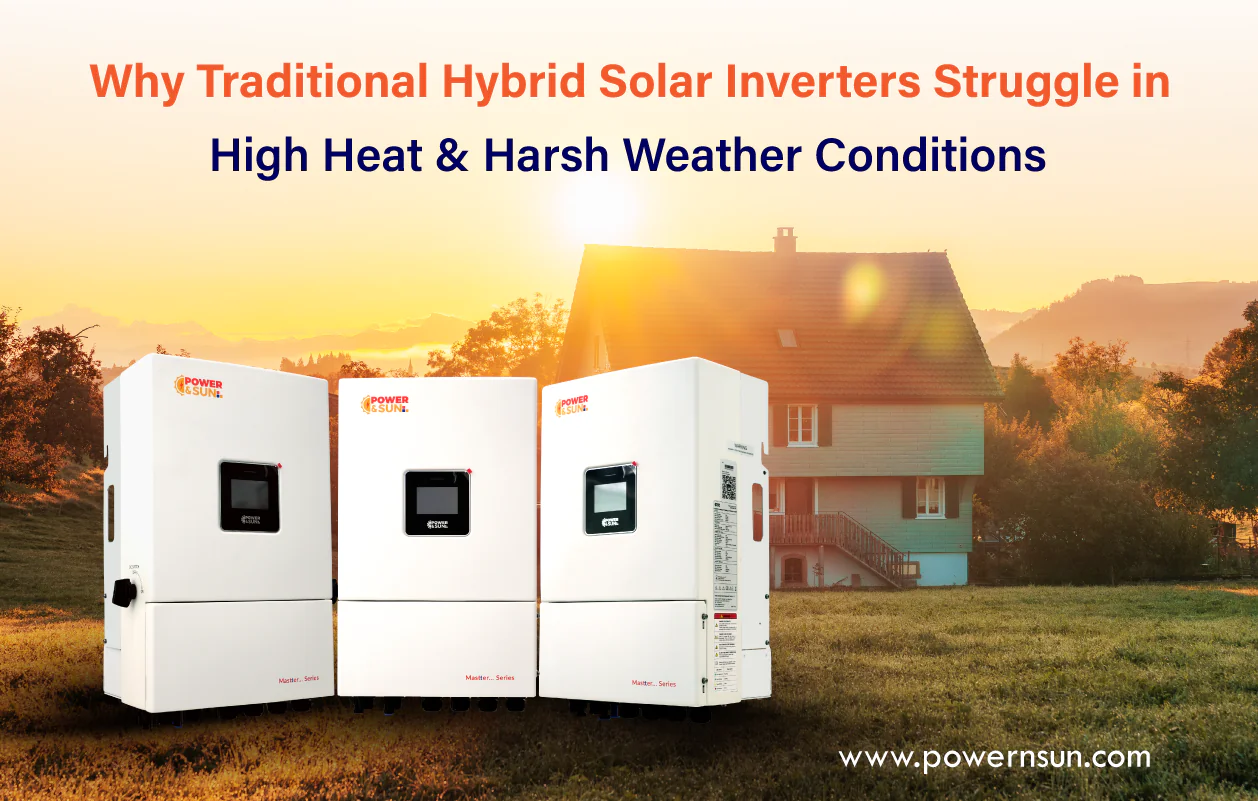
Why Traditional Hybrid Solar Inverters Struggle in High Heat & Harsh Weather Conditions
Solar energy systems are designed to operate outdoors, but harsh environmental conditions can place significant stress on one of the most important components of the system:
The Solar Inverter
In regions with extreme heat, dust, humidity, unstable grids, and continuous outdoor exposure, many solar users experience issues such as:
- Solar inverter overheating
- Frequent inverter shutdowns
- Reduced energy efficiency
- Power fluctuations
- Poor backup performance
- Weather-related inverter failures
This is one of the reasons people frequently search online for:
- solar inverter for hot climate
- solar inverter overheating
- inverter for harsh weather conditions
- outdoor solar inverter
- high efficiency solar inverter
As solar adoption continues to grow across the Middle East, Africa, and other high-temperature regions, inverter reliability has become more important than ever.
In this article, we’ll explore:
- Why traditional solar inverters struggle in harsh climates
- Common environmental challenges affecting solar performance
- What features modern systems should include
- How the Power & Sun hybrid inverter range and Mastter Series inverter technology help improve system reliability and energy continuity
Why Heat Is a Major Challenge for Solar Inverters
Unlike solar panels, inverters contain sensitive electronic components that continuously convert DC electricity into usable AC power.
When operating temperatures become too high, inverter performance can begin to decline.
In many rooftop installations, surrounding temperatures can rise significantly during summer afternoons, especially in:
- Desert climates
- Industrial zones
- Commercial rooftops
- Metal roof installations
This often leads to:
- Thermal stress on components
- Reduced power conversion efficiency
- Automatic power reduction
- Unexpected shutdowns
- Faster system aging
Over time, excessive heat can reduce both inverter lifespan and overall solar system performance.
1. Extreme Heat & High Temperature Problems
The Problem
In very hot climates, traditional solar inverters often face:
- Overheating
- Auto shutdown
- Power derating
- Fan failure
- Reduced efficiency
This becomes a serious issue in regions like the UAE and other desert environments where summer temperatures remain extremely high for long periods.
The Mastter Series Solution
The Mastter Series hybrid inverter is designed to support harsh outdoor operating conditions with features such as:
- Operating temperature range from -40°C to +60°C
- Smart Fan Cooling System
- High efficiency up to 97.7%
These features help improve inverter stability and energy performance during high-temperature operation.
The Advantage
Compared to many standard inverters, the Power & Sun hybrid inverter range is better suited for:
- Desert environments
- High rooftop temperatures
- Long operating hours
- Outdoor solar installations
This helps maintain more stable performance even in demanding weather conditions.
2. Dust & Sand Storm Problems
The Problem
Dust and sand storms can:
- Block cooling vents
- Increase inverter temperature
- Reduce airflow
- Damage internal components
- Lower system efficiency
These environmental conditions are common in outdoor solar installations across hot-climate regions.
The Mastter Series Solution
The Mastter Series inverter includes:
- IP66 Protection
- Fully sealed outdoor-ready design
This helps reduce the impact of dust-heavy environments on inverter operation.
The Advantage
The IP66-rated design helps protect the inverter against:
- Heavy dust exposure
- Sand storms
- Outdoor environmental stress
This makes the system more durable and reliable compared to many conventional outdoor inverters.
3. Rain & Humidity Problems
The Problem
Heavy rain and humidity may cause:
- Water ingress
- Corrosion
- Short circuits
- Electrical leakage
Poor environmental protection can significantly affect long-term inverter reliability.
The Mastter Series Solution
The Power & Sun Mastter Series hybrid inverter platform includes:
- IP66 waterproof protection
- Ground fault monitoring
- Residual leakage current detection
These safety features help improve operational safety during humid and rainy conditions.
The Advantage
The inverter is designed to operate more safely in:
- Outdoor installations
- Coastal regions
- Humid climates
- Rain-prone environments
This helps improve long-term system reliability.
4. Lightning & Surge Voltage Problems
The Problem
Lightning strikes and unstable grid conditions can damage:
- PCB boards
- MPPT systems
- Internal electronics
- Battery systems
Voltage spikes remain one of the most common causes of inverter damage.
The Mastter Series Solution
The Mastter Series inverter supports:
- DC Type II Surge Protection
- AC Type II Surge Protection
- Anti-islanding protection
These protection systems help reduce risks caused by unstable electrical conditions.
The Advantage
Enhanced surge protection helps improve inverter durability and supports safer operation during sudden voltage fluctuations and lightning-related events.
5. Grid Failure & Power Fluctuation Problems
The Problem
Grid instability may cause:
- System tripping
- Frequency errors
- Backup delays
- Unexpected shutdowns
This is especially challenging in regions with unstable utility infrastructure.
The Mastter Series Solution
The Power & Sun hybrid inverter series supports:
- UPS-level switching (<4ms)
- Smart backup output
- Stable AC output systems
These features help improve energy continuity during outages and power fluctuations.
The Advantage
Fast switching capability helps:
- Reduce downtime
- Improve backup reliability
- Protect sensitive loads
- Support uninterrupted operation
This is particularly useful for homes, offices, and commercial applications requiring stable backup support.
6. High Solar Generation & Overloading Problems
The Problem
Many traditional inverters struggle during peak sunlight conditions and cannot efficiently manage high PV generation.
This may result in:
- Energy clipping
- Reduced solar utilization
- Lower energy efficiency
The Mastter Series Solution
The Mastter Series inverter supports:
- Up to 200% PV oversizing
- Dual MPPT technology
- High PV input current support
This helps optimize solar energy harvesting during peak generation periods.
The Advantage
Advanced PV management helps:
- Increase solar production
- Improve energy optimization
- Maintain better system efficiency
Even during extreme sunlight conditions.
7. Outdoor Installation Challenges
The Problem
Outdoor installation can reduce inverter lifespan due to continuous exposure to:
- Heat
- Dust
- Rain
- Humidity
- Temperature fluctuations
The Mastter Series Solution
The Power & Sun hybrid inverter platform includes:
- IP66 outdoor protection
- Smart cooling technology
- Strong transformerless design
- Operating altitude support up to 4000m
These features support more reliable outdoor operation.
The Advantage
The system is suitable for:
- Outdoor residential installations
- Commercial rooftops
- Industrial applications
- Harsh environmental conditions
This helps improve long-term durability and operational stability.
Why Modern Hybrid Inverters Perform Better in Harsh Conditions
Modern hybrid inverter technology is designed to manage both energy generation and energy storage more intelligently.
Unlike traditional systems, hybrid inverters can:
- Manage solar, battery, and grid power together
- Support backup operation during outages
- Improve energy optimization
- Deliver more stable performance
- Operate efficiently in demanding climates
This is why many users are now shifting toward advanced hybrid solar inverter systems designed for modern energy requirements.
How Power & Sun Mastter Series Supports Harsh-Environment Solar Applications
Modern solar installations require more than basic energy conversion.
The Power & Sun Mastter Series inverter is designed to support:
- High-temperature operation
- Outdoor reliability
- Backup continuity
- Smart energy management
- Stable solar performance
With features such as:
- IP66-rated protection
- Smart fan cooling
- High MPPT efficiency
- Hybrid backup functionality
- Intelligent protection systems
- Battery compatibility
The system is designed to support demanding solar applications in harsh environments.
Final Thoughts
Traditional solar inverters often struggle in:
- High temperatures
- Dust-heavy environments
- Outdoor installations
- Rain & humidity
- Unstable grid conditions
Modern Power & Sun hybrid inverter technology helps solve many of these challenges by improving:
- Reliability
- Backup capability
- Energy optimization
- Outdoor durability
- System stability
For users operating in harsh climates, choosing the right inverter technology can make a major difference in long-term solar performance and energy efficiency.
Also Read, Smarter, Safer, Stronger: Power & Sun’s Solar Inverter & Battery Launch for MEA