How Hybrid Inverters Are the Future of Energy Independence?
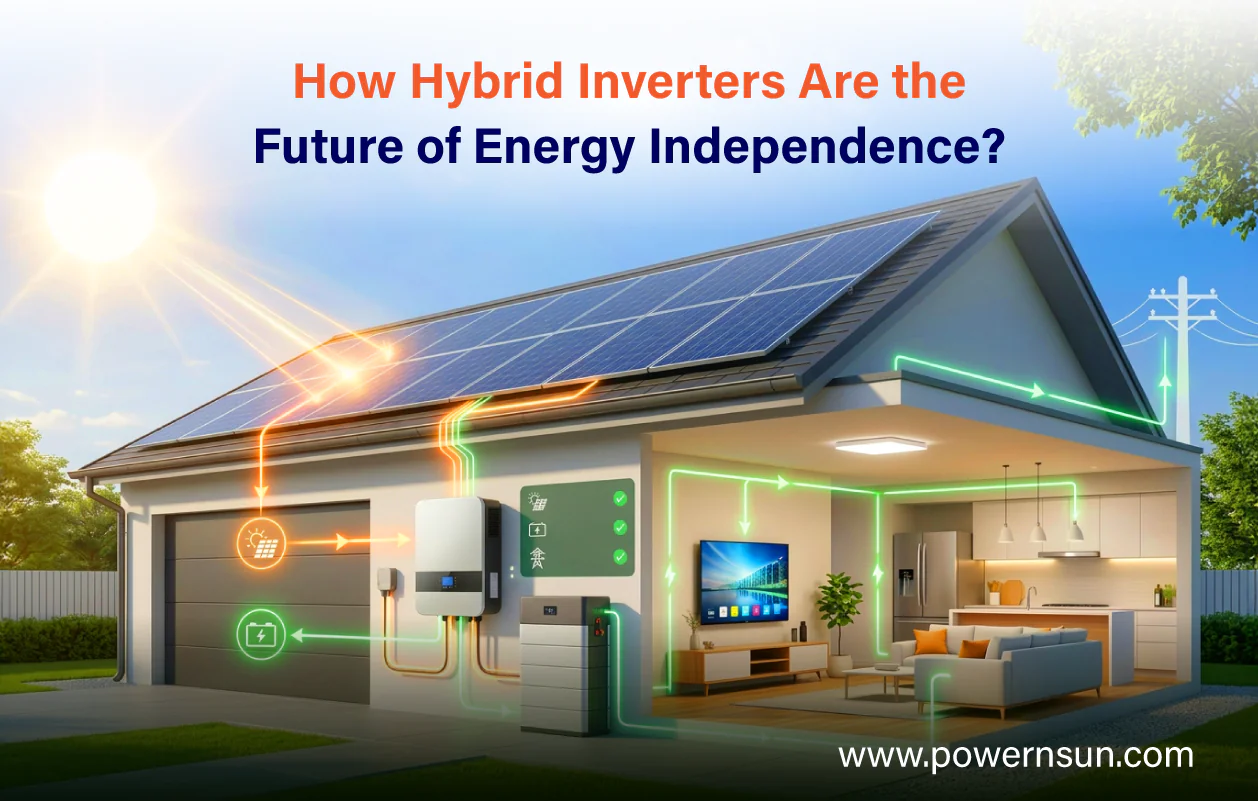
A hybrid inverter combines a solar inverter and a battery inverter in one unit. It converts DC from your panels to AC for your loads, charges and discharges a battery, and switches between solar, battery and grid power automatically. One box replaces what used to take three.
This guide covers how they work, how to size one, what they cost, and the eight specifications that separate a good unit from a cheap one.
What is a hybrid inverter?
Hybrid inverters are the recent innovations that maximize the effectiveness of solar systems. As nations across the world investigate sustainable choices to adopt, specifically from solar, a hybrid inverter is an excellent solution. It perfectly bridges the gap between the electricity grid and solar energy.
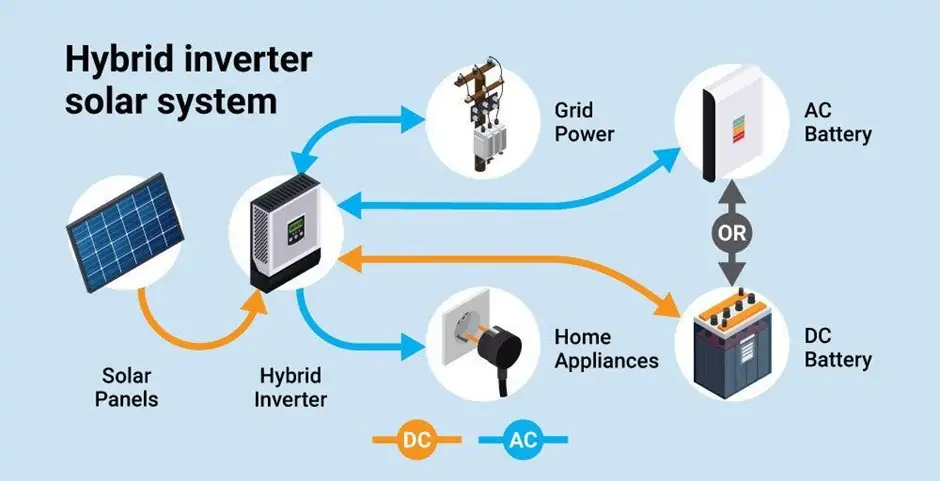
A hybrid inverter is the best combination of a solar inverter and a battery inverter that are integrated into single equipment. This powerful inverter can effectively manage solar panels, solar batteries, and the utility grid, simultaneously. Apart from the basic function of a solar inverter, i.e. converting DC electricity to AC electricity, these advanced inverters come with a built-in battery storage system. This allows the devices to offer users greater energy management and utilization, thus serving as a complete solution for having the most solar power.
Essential Features Of Hybrid Inverters In Adopting an Independent World
What makes hybrid inverters have a competitive edge over other kinds of solar inverters is their capability of bi-directional power transfer. Hybrid inverters optimize energy usage, deliver backup power during outages, improve self-consumption of solar power, and all together make the device a versatile and efficient one for an energy-independent world.
1. Battery storage
Hybrid inverters are capable of storing the excess power and letting the users enjoy energy for later use. Thus they promote greater energy independence and flexibility in reducing the dependence on the grid. Your solar power installation can yield you the utmost benefit if you have an energy storage system. Hybrid inverters are designed to integrate storage always, saving you from the costs of an additional storage device.
2. Easily retrofit Backup power
During outages, you can enjoy a continued supply of energy, as hybrid inverters can give you backup power. If the grid goes down, the inverter gets into ‘island mode’ and starts supplying the stored energy in the batteries to deliver power to the connected appliance, ensuring an uninterrupted and seamless power supply.
3. Streamlined design
If you are thinking about adding a battery backup system to the existing solar PV system, you not only have to buy a battery bank. But, you also have to look into purchasing a new inverter, a charge controller as well as a monitoring system. All these will take a significant time, cost, and in addition a lot of space. No worries! The hybrid inverter integrates all these aspects in a single device and has the best worlds of charge control, performance monitoring, and bi-directional AC DC inverter functioning.
4. Energy Management
The modern range of hybrid inverters is integrated with smart energy management features. These energy management features enable optimizing energy usage depending on user-defined priorities and the availability of energy. The inverters are intelligent enough to switch between various energy resources and prefer self-consumption of solar energy. Thus they reduce the dependence on the grid and improve cost savings.
5. Centralised monitoring
Most advanced hybrid solar inverters feature monitoring and smart controlling capabilities. These features authorize users to efficiently track energy production, consumption, and status of the battery via a user-friendly interface. The insights derived through the monitoring system allow users to make informed decisions about the usage of solar systems and have an eye on their performance.
6. Grid connectivity
Hybrid inverters are capable of switching between grid power, solar power, and battery power, seamlessly. This flexibility feature of hybrid inverters empowers users to maximize self-consumption, lowers the dependency on the grid, and ultimately reduces electricity bills.
What size hybrid inverter do you need?
Size the inverter to your peak simultaneous load, not your total connected load. Add roughly 20% headroom for motor starting current. Air conditioning and pumps draw far more at startup than when running.
| Inverter | Typical loads it covers | Overnight backup on [FILL] kWh |
|---|---|---|
| 5kW single phase | Lights, fans, TV, router, fridge, freezer, one 1.5 ton AC | [FILL] hours |
| 6kW single phase | Above, with more headroom for simultaneous startup | [FILL] hours |
| 8kW single phase | Above, plus a second AC and washing machine | [FILL] hours |
| 10kW single phase | Large villa | [FILL] hours |
| 10–15kW three phase | Whole villa or light commercial | [FILL] hours |
Sizing depends on your peak simultaneous load, not total connected load.
Use our solar sizing tool to work it out from your appliance list.
The best benefits of Hybrid Solar Inverters
- Allows users to take advantage of stored energy during peak demand periods and avoids drawing expensive electricity from the grid.
- Complete control over energy consumption through the features of flexibility and versatility
- Scalable devices that allow adding extra solar panels/batteries as the energy needs grow.
- Lowered electricity bills
- Seamlessly integrates with your existing solar system and simplifies the upgrade process.
- Maximizes cost savings and minimizes grid dependency
How hybrid inverters perform in high heat
This is the section most guides skip, and across the Gulf and Africa it decides whether a system performs as sold.
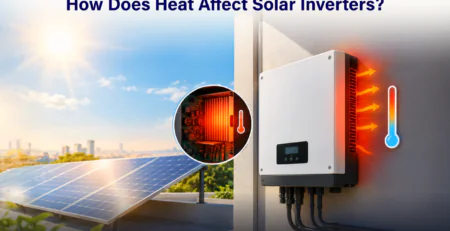
Inverters derate when they get hot: above a threshold ambient temperature the unit reduces output to protect itself. A datasheet quoting rated output at 25°C tells you very little about a Dubai rooftop in July or a Lagos compound in March.
What to check on any datasheet:
- Ambient operating range — look for an upper limit of at least +60°C
- Ingress protection — IP65 or above for outdoor mounting, IP66 for dust and driving rain
- Cooling method — natural convection or fan-assisted, and whether fans are field-replaceable
- Maximum operating altitude and the point at which altitude derating begins
For reference, the Mastter Series is rated −40 to +60°C, IP66, with smart fan cooling and operation up to 4,000m (derating above 3,000m).
Power & Sun Mastter Series hybrid inverters
Measured against the eight criteria above, here is where our own range sits.
Mastter Series — Single Phase LV
| Specification | MSH-5kW-1Ph | MSH-6kW-1Ph | MSH-8kW-1Ph | MSH-10kW-1Ph |
|---|---|---|---|---|
| Rated output | 5kW | 6kW | 8kW | 10kW |
| Max apparent power | 5.5kVA | 6.6kVA | 8.8kVA | 11kVA |
| Max efficiency | 97.70% | 97.70% | 97.70% | 97.70% |
| EU efficiency | 96.70% | 96.70% | 96.70% | 96.70% |
| MPPT efficiency | 99.80% | 99.80% | 99.80% | 99.80% |
| MPPT / strings | 2 / 2 | 2 / 2 | 2 / 4 | 2 / 4 |
| MPPT voltage range | 90–450V | 90–450V | 90–450V | 90–450V |
| Max PV input voltage | 550V | 550V | 550V | 550V |
| Battery current | 190A | 190A | 190A | 210A |
| Surge | 2x rated, 10s | 2x rated, 10s | 2x rated, 10s | 2x rated, 10s |
| Transfer time | <4ms | <4ms | <4ms | <4ms |
Common to all single-phase models: 40–60V battery range, lithium-ion or lead-acid, CAN/RS485 BMS
communication with self-adaption. −40 to +60°C, IP66, smart fan cooling, 25kg, 350×560×237mm.
Up to 16 units in parallel. 7.5 year manufacturer warranty with 24/7 support from our Dubai service centre.
Mastter Series — Three Phase LV
| Specification | MSH-10kW-3Ph | MSH-12kW-3Ph | MSH-15kW-3Ph |
|---|---|---|---|
| Rated output | 10kW | 12kW | 15kW |
| Max apparent power | 10kVA | 12kVA | 15kVA |
| Max efficiency | 97.34% | 97.34% | 97.34% |
| EU efficiency | 96.45% | 96.45% | 96.45% |
| MPPT efficiency | 99.80% | 99.80% | 99.80% |
| MPPT / strings | 2 / 4 | 2 / 4 | 2 / 4 |
| MPPT voltage range | 170–900V | 170–900V | 170–900V |
| Max PV input voltage | 1000V | 1000V | 1000V |
| Battery current | 210A | 250A | 300A |
| Surge | 2x rated, 10s | 2x rated, 10s | 2x rated, 10s |
| Transfer time | <4ms | <4ms | <4ms |
Common to all three-phase models: 220V/380V or 230V/400V output, 40–60V battery range,
−40 to +60°C, IP66, smart fan cooling, 39kg, 380×625×270mm. Up to 16 units in parallel.
7.5 year warranty.
Get into the future of energy independence with Power & Sun
Power & Sun is your one-stop solution for a comprehensive range of top brands of hybrid solar inverters such as Sungrow, DEYE, Solplanet, INVT Solinteg, and more. Go energy-independent with all-in-one hybrid solar inverters that help lower your utility bills and reliance on the grid. Our innovative and latest series of hybrid inverters are versatile, smart, flexible, and scalable to meet any energy needs.
Go sustainable, go solar, and discover how you can enjoy energy independence with our hybrid inverters.